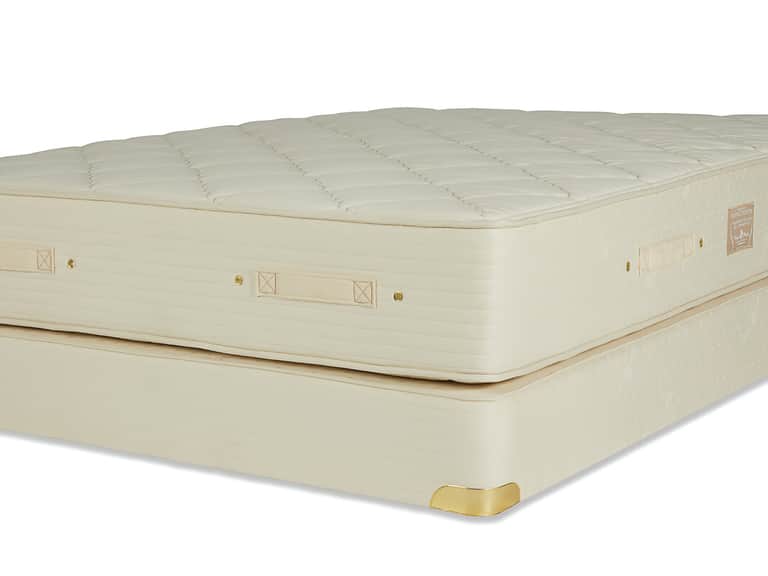
Vispring Regal Superb
Experience regal comfort with breathable Shetland wool and cotton, responsive loft, cool temp regulation, and edge-to-edge support for uninterrupted, year‑round sleep.
Mattress sizing is not merely about inches; it is a dialogue between body, sleep position, and the geometry of a room. This guide travels through standard dimensions, room layouts, and the nuanced language of comfort to help readers determine which size best supports alignment, movement, and rest.
In the United States, mattress sizes are governed by a predictable set of dimensions that correlate with room geometry and partnership. The twin, with its compact footprint, is a longtime ally of children’s rooms and dormitories, offering a minimal footprint while preserving floor space for study and play. The full, commonly called a “double,” bridges the gap between intimate pairs of sleepers and guests who require a practical, space-conscious option. The queen, the most universal choice for couples and solo sleepers who crave balance between space and room footprint, sits at the heart of many bedrooms. The king expands the canvas for partners who desire expansive room to stretch, while the California king, though longer and narrower, tailors to individuals who prioritize length over width.
Below are standard dimensions commonly found in consumer markets:
Each dimension whispers a different story about sleep: how many legs can tuck in, how much room there is to move, and how much wall space the headboard and footboard must respect.
The alignment of the spine during sleep is a central pillar of restorative rest. The size you choose should support a neutral spinal posture across the night and without encroaching on space that would restrict movement or lead to awkward contortions at the edges of the bed.
Key questions to consider:
The answers guide the selection: side sleepers often benefit from a bit more width to accommodate hip and shoulder alignment, while back sleepers may appreciate length in addition to width. Stomach sleepers sometimes require a firmer feel to prevent excessive sinkage, which can influence the perceived comfort of larger sizes.
A bed should be a functional anchor in a room, not a bulky obstacle. The general rule of thumb is to allow at least 24 inches (about 60 cm) of clearance on each side of the bed for easy making and movement, plus room for doors to open fully and for a dresser or nightstand to be accessible.
Practical steps:
In small bedrooms, a modestly sized mattress can liberate floor space for a desk or seating area, while in larger rooms, a king-size setup can become a sanctuary of calm, a place where movement feels unencumbered.
Weight and height influence how a mattress feels at the same size. A heavier sleeper may experience deeper compression and feel a firmer support, while a lighter sleeper may perceive the same mattress as plusher or softer. The size you choose should accommodate body mass distribution so pressure points are relieved along the spine, hips, shoulders, and lower back.
Practical approach:
The right size, combined with a supportive foundation, helps harmonize weight distribution and posture, enabling sleep to unfold in a state of balanced ease.
The following checks help translate theory into practice. They are quick, repeatable, and designed to reduce the risk of buyer’s remorse.
To illustrate how a high-end, meticulously engineered mattress could influence sizing decisions, consider the Vispring Regal Superb. This premium piece demonstrates how materials, pocket-spring architecture, and edge support interact to define perceived comfort and support across sizes. While its price and construction place it beyond typical consumer budgets, the underlying principles illuminate why larger sizes can better preserve edge integrity and motion isolation for two sleepers.
The Regal Superb features a handcrafted, multi-layered interior that balances loft with stability. The hand-nested pocket springs, combined with a layered wool and cotton construction, exemplify how a mattress can be tuned to minimize partner disturbance while maintaining a generous surface area for spread and rest. When pairing such a mattress with a larger frame—such as a king or California king—the bed’s geometry allows each sleeper to enjoy a wide, defined zone of comfort, reducing interference and encouraging deeper, more restorative sleep.
In everyday terms, the lesson is: as you move toward larger sizes, you gain freedom of movement and improved edge integrity, which can translate into longer, more uninterrupted stretches of sleep for couples. A universal truth endures: the best-fit size honors the body’s contours and the room’s rhythms.
A benchmark in luxury sleep, the Regal Superb pairs real Shetland wool loft with hand-nested pocket springs for independent support and luxury air-flow. While not an everyday purchase, it illustrates the premium tier’s impact on comfort perception, edge stability, and motion isolation—factors that inform size choices in practical contexts.
Price: $7,300.00
The ultimate goal is a bedding configuration that anchors the room’s balance while supporting healthy alignment across the night. The right size becomes a foundation—not only for rest but for the daily energy that follows.
Among the catalog of premium bedding, the Vispring Regal Superb stands as a benchmark in craftsmanship and the science of comfort. Its layered approach to loft and support demonstrates how premium materials shape the perception of space on a bed. To illustrate the sizing narrative within a real-world context, consider incorporating a high-quality king-size unit in a master bedroom where space permits. The larger surface distributes body pressure more evenly, reducing the likelihood of edge sag and ensuring two sleepers can shift without encroaching on one another’s space.
A 9.1-inch border-to-border depth with 2,236 individually pocketed springs creates a responsive, motion-isolated sleep surface. The blend of Shetland wool and cotton lofts the body while heat and pressure are distributed across the surface.
Note: Premium product; representative of how luxury construction informs sizing needs.
For exceptionally tall sleepers or rooms with generous depth, the California king prioritizes length, helping maintain alignment from head to toe. It pairs well with a low-profile frame to preserve drama-free ceiling height and traffic flow.
Practical takeaway: when height matters more than width, favor length-first configurations.
Mattress sizing terminology often emerges from the long shadow of interior design and orthopedic science. In this guide, we align terms with everyday decisions to help readers translate vocabulary into comfortable space planning.
This guide centers on practical sizing decisions and sleep ergonomics, not on promoting specific products or sales. While product highlights may appear to illustrate concepts, the emphasis remains on reader education, transparent reasoning, and reproducible checks that help you determine the right fit for your body and room.
If you’d like, you can explore collaborative resources such as sizing charts, room planners, and fit calculators that translate measurements into recommended sizes and configurations. The right set of tools empowers you to compare options, test fit virtually, and approach the purchase with confidence.
Input room dimensions, sleeper count, and preferred bed orientation to generate a size recommendation and space utilization estimate.
A concise, printable guide to measure clearance, assess edge access, and confirm frame compatibility.
For readers seeking hands-on experiences, we offer a curated set of high-quality bedding items from reputable brands to illustrate how design choices influence sizing decisions. The Vispring Regal Superb, for example, demonstrates how premium padding geometries and edge support inform space planning in larger bedrooms.
This piece synthesizes architectural considerations, ergonomic principles, and practical guidelines to assist readers in navigating the complex landscape of mattress sizing. It is informed by standard industry dimensions and room-planning best practices, anchored in the editorial clarity and curiosity that characterize National Geographic-style explorations of everyday topics.