Nursery sleep surfaces
Organic Mattress Materials for Nurseries: What to Consider
Choosing a nursery mattress is a practical exercise in looking closely: at the materials inside, the way the mattress is built, how it fits the crib, and what daily care will require. “Organic” can be a useful starting point, but the details behind a label matter more than the label alone.
Published October 18, 2026
A nursery mattress is a compact object with a consequential job. It must fit its crib, provide a firm and even surface, and stand up to the routines of family life: fitted sheets, regular changes, occasional spills, and careful cleaning. When caregivers consider organic mattresses, they are often comparing materials as well as seeking a sleep environment that feels thoughtfully made. A useful comparison begins with the construction and ends with the complete setup—not with a broad promise on a package.
Organic claims can refer to a particular fiber, such as cotton, or to a defined part of a product’s production. They do not automatically describe every component, establish that a mattress is safer in every respect, or replace checking that the product is intended for the child’s age and crib. Read labels and documentation carefully, and keep safety guidance from the crib and mattress manufacturers at the center of the decision.
Start with fit, not a material label
Before comparing ticking, fill, or certifications, confirm that a mattress is made for the crib in question. Crib interiors and mattress dimensions are designed to work as a pair. A mattress that is too small can leave a gap at the edge; one that is too large may not sit flat or may be difficult to place correctly. Do not assume that two products described with the same general size name will fit identically.
Check the crib manufacturer’s instructions for the mattress dimensions it accepts, then compare those specifications with the mattress label. Measure the interior of the crib and the mattress if the instructions call for it, and follow the manufacturer’s method for assessing fit. The mattress should lie flat, remain stable, and be compatible with the crib’s support system. If there is doubt about a gap or an unusual fit, pause and ask the crib or mattress manufacturer rather than trying to make the combination work with improvised padding.
Compatibility continues above the mattress. Fitted sheets and any protective pad should be designed for the mattress size and depth, with elastic that holds the fabric securely in place. A sheet that is too loose can bunch; a layer that is too thick or poorly fitted can alter the surface. Keep the sleep surface simple and use only items permitted by current safe-sleep guidance and the product instructions.
- Confirm the crib’s approved mattress dimensions and support requirements.
- Check the mattress label for its exact dimensions, intended use, and care directions.
- Choose fitted sheets made for that size and mattress depth.
- Use a protector or pad only when it is compatible with the mattress and crib instructions.
- Recheck fit if a mattress, crib, sheet, or protective layer is replaced.
What “organic” may—and may not—tell you
The word organic is not a complete description of a mattress. It may refer to an outer fabric, a filling, or a material that has been certified under a specific standard. A product can combine several layers and components, each with a different source and manufacturing process. The practical question is not only whether a mattress makes an organic claim, but what the claim covers and how it is verified.
Look for precise language. Does the documentation identify the material, such as organic cotton, and specify whether it applies to the cover, batting, or another component? Is a third-party certification named, and can you confirm its scope through the certifier’s own information? A certification may address fiber content, processing, chemical restrictions, or other defined criteria; it should not be interpreted as a blanket guarantee about every aspect of a finished product.
Be wary of claims that rely on reassuring adjectives without explaining the underlying standard. “Natural,” “green,” and “eco-friendly” are broad terms, not substitutes for a material list. Likewise, a claim about one layer does not necessarily mean every layer is made from the same material. Clear product information should help a caregiver distinguish the cover fabric from the filling, core, waterproof barrier, adhesives, and other construction elements where these are disclosed.
Reading the material layers
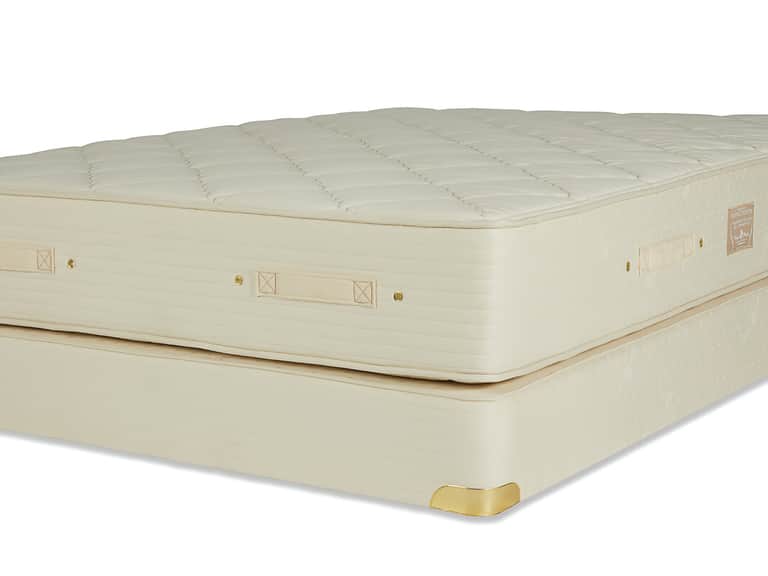
A nursery mattress is a layered system. The outer cover, padding, core, seams, and any moisture barrier each influence how the mattress behaves and how it can be cared for. Material names are only a beginning; construction and maintenance instructions determine whether an option suits a household’s needs.
Cover fabric
The cover is the layer caregivers see and clean most often. Cotton is common in bedding, and some mattresses specify organic cotton for the cover or a portion of it. Check whether the cover is removable, whether it can be washed, and what the care label permits. A cover that cannot be removed may require spot cleaning only, while a washable cover can make some messes easier to manage—but washing rules and drying instructions still matter.
Filling and padding
Padding may be made from cotton, wool, polyester, or blended materials, among other options. A description should identify the main components rather than leaving caregivers to infer what “cushioned” or “natural” means. Ask whether a stated certification applies to the filling as well as the fabric. Avoid adding extra softness or aftermarket layers to a crib mattress unless the manufacturers explicitly allow them and they comply with applicable guidance.
Core construction
The core gives a mattress its structure. It may use foam, springs, or another engineered construction. For an infant sleep surface, firmness and proper fit are essential considerations; a soft, deeply cushioned surface is not a substitute for appropriate support. Follow the product’s age and use instructions, and do not judge suitability by pressing a showroom sample alone. The full mattress specification and the crib’s requirements are more useful than a general impression of feel.
Moisture barriers
Moisture protection can help keep liquid from reaching the mattress core, but barrier materials vary. Some products use a coated or laminated layer; others rely on a separately fitted protector. Ask what the barrier is made from, whether it is integrated into the mattress or sold separately, and how it affects cleaning and airflow according to the manufacturer. A waterproof claim describes a function, not necessarily the composition of the layer or the full environmental profile of the product.
Moisture protection and everyday care
Nursery care is shaped by small, repeated tasks. A mattress may encounter spilled milk, diaper leaks, or ordinary household dust. A well-matched protective layer can make routine cleanup more manageable, but it must fit securely and be appropriate for the mattress and crib. Product instructions are not optional fine print: they explain what can be washed, what must be wiped, and which cleaning methods could damage a barrier or change the mattress’s condition.
Some caregivers prefer a washable pad; others look for a mattress with a built-in moisture-resistant surface. Each approach has trade-offs. A separate pad is removable, but it adds another layer whose dimensions, thickness, and attachment must be checked. An integrated barrier avoids an extra component, but may limit how the mattress itself can be cleaned. Consider the likely care routine before choosing, and verify that any protector or pad is specifically designed for the mattress dimensions.
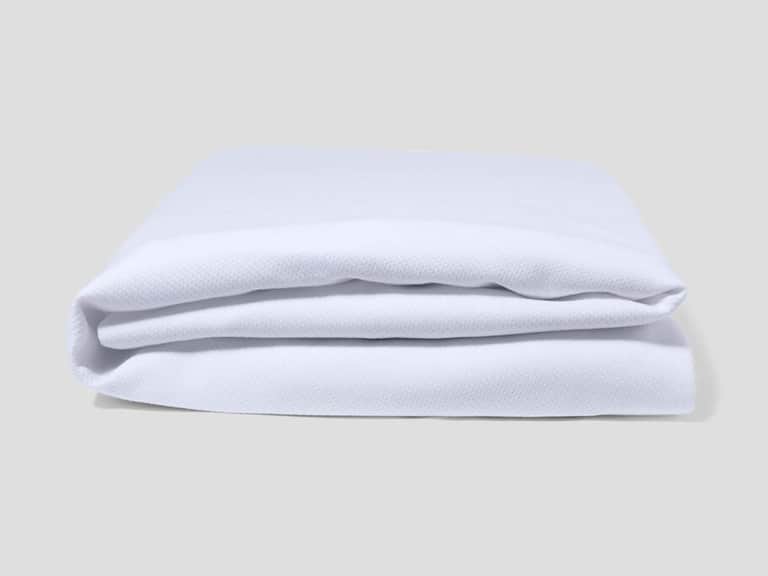
For example, the Naturepedic Waterproof Organic Cotton Crib Mattress Pad is described as a fitted crib pad with organic cotton flannel on top, an organic cotton muslin underside, and a thin waterproof inner layer. Its product information lists dimensions of 28 by 52 inches and machine-wash and dry care. Those details may help illustrate what to examine in a protective layer: the stated materials, the barrier construction, the fit, and the cleaning directions. They do not replace confirming compatibility with a particular crib mattress or following the manufacturers’ instructions.
Care instructions also affect longevity. Some materials may shrink, clump, or lose their shape if washed or dried incorrectly. Never assume a mattress core can be machine washed simply because its cover is removable. Use the cleaning method specified for each component, allow items to dry fully as directed, and inspect them before putting them back in the crib. A damp or damaged layer should not be returned to use without checking the manufacturer’s guidance.
Firmness and the sleep surface
For infants, safe-sleep recommendations emphasize a firm, flat, level surface designed for infant sleep, with a fitted sheet and no loose items in the sleep space. Caregivers should consult current guidance from recognized public-health authorities and follow the crib and mattress instructions. Material preferences—including organic fibers—do not override these basic requirements.
Firmness can be difficult to evaluate from marketing language. Terms such as “plush,” “luxury,” or “pressure relieving” are not useful measures of whether a mattress is appropriate for an infant. Check that the mattress is specifically intended for the child’s age and use, and that it meets applicable regulations in the market where it is sold. If a mattress is dual-sided for different stages, follow the manufacturer’s directions about which side to use and when to turn it.
Do not place an additional topper, pillow, quilted pad, or soft cushioning layer in the crib to alter the feel. Any add-on changes the surface and may create fit or safety concerns. Keep the sleeping area uncluttered, and ask a pediatric health professional or the relevant product manufacturer if a medical or developmental circumstance raises questions about the sleep setup.
How to evaluate certifications and claims
Certifications can help make a complicated supply chain easier to understand, but their meaning depends on the standard and the component being certified. A credible product description should name the certification, identify the materials or processes it covers, and avoid suggesting that the seal proves claims outside its scope. When the information is unclear, consult the certifier’s public documentation or ask the manufacturer for a certificate or product-specific explanation.
It is useful to separate several questions that are often bundled together:
- Fiber origin: Which fibers are identified as organic, and what portion of the product do they represent?
- Processing: Does the stated standard address processing methods or chemical restrictions?
- Finished-product testing: Is there testing or certification for the complete mattress, or only for particular materials?
- Regulatory compliance: Does the product meet the requirements that apply to mattresses for its intended use?
- Traceability: Can the company explain where the named materials come from and how claims are documented?
These questions are not a demand for perfect certainty. They are a way to compare products on evidence rather than atmosphere. A transparent manufacturer should be able to explain what a claim means, what it does not mean, and where a caregiver can find the relevant product and care documentation.
Dimensions, sheets, and layering
Nursery mattresses are often sold in familiar crib-size categories, but the crib’s instructions remain the best reference for compatibility. Measure carefully if the mattress is being paired with an existing crib, especially when the crib is older, convertible, or made outside the region where the mattress was purchased. Confirm the mattress depth as well as its length and width, since fitted sheets depend on all three dimensions.
When selecting sheets, check the package for the mattress size and depth range. Stretch fabric can make a sheet easier to fit, but it does not turn an incompatible sheet into a suitable one. After fitting the sheet, check that its corners remain in place and that the fabric lies smooth across the surface. Replace stretched, torn, or poorly fitting sheets. Avoid stacking multiple pads or sheets to compensate for a size mismatch.
Protectors deserve the same attention. A waterproof layer can be helpful for cleanup, while a breathable fabric may be appealing to households considering airflow. These descriptions should be assessed alongside construction details, actual care instructions, and fit—not treated as proof of an overall safety advantage. The final arrangement should follow the guidance for the mattress, crib, and current safe-sleep recommendations.
A practical comparison checklist
When several nursery mattress options appear similar, a short, consistent checklist can make differences clearer. Record specifications from the manufacturer rather than relying on summaries from a retailer alone. If a detail is missing, treat it as an open question to resolve before deciding.
- Intended use: Is the mattress explicitly designed for the child’s age and the crib type?
- Dimensions: Do the exact measurements match the crib’s requirements?
- Materials: Are the cover, filling, core, and moisture barrier described separately?
- Organic claims: Which component is certified, under what standard, and by whom?
- Surface characteristics: Is the mattress described as firm, flat, and appropriate for its intended use?
- Care: Can the cover or pad be washed, and what are the temperature and drying limits?
- Protection: Is moisture resistance integrated or provided by a separate, compatible layer?
- Documentation: Are safety, warranty, and care instructions easy to find and specific to the model?
- Condition: If used, is the mattress clean, intact, correctly sized, and approved for reuse by relevant guidance?
A note on secondhand mattresses
A secondhand mattress can seem like a practical way to reuse nursery equipment, but its history and condition may be difficult to establish. Check for damage, persistent odors, stains, moisture exposure, sagging, or a compromised cover. Confirm that it fits the crib precisely and that its model and age do not conflict with current product instructions or applicable safety guidance. If its history is unknown or its structure has changed, seek advice from a qualified source before using it.
Reusing a mattress also complicates material claims. A label may be missing, and past cleaning or storage may have affected the cover or protective layers. Do not rely on a seller’s general description in place of product documentation. The priority is an appropriate, clean, intact mattress that fits the crib and is suitable for the intended use.
Bring the whole setup into view
An organic nursery mattress is not a stand-alone decision. Its materials, care requirements, dimensions, sheets, and moisture protection all meet at the same small sleep surface. The most useful choice is one whose specifications are clear, whose size matches the crib, and whose upkeep fits the household’s routine. Organic content may matter to a family’s priorities, but it should be evaluated component by component rather than treated as a substitute for fit or product suitability.
Take time to compare the documentation, ask focused questions, and keep the final arrangement simple. A carefully fitted mattress, compatible bedding, and a clean, firm, flat sleep surface form the practical foundation of a nursery setup. From there, transparent materials information and straightforward care directions can help caregivers make a decision with confidence—without relying on sweeping claims or unnecessary layers.