Mattress Fit Guide
Vispring Regal Superb and Baronet Superb: Comparing Traditional Construction
Two mattresses from the same maker can share a craft tradition yet feel notably different beneath the body. Comparing the Vispring Regal Superb and Baronet Superb means looking beyond their names to the details that shape a night’s rest: spring design, upholstery, surface feel, and how each construction responds to the person sleeping on it.
Published November 3, 2026
A mattress is a small landscape of materials and mechanics. Beneath its cover, springs compress and rebound; natural fibres settle, breathe, and soften; stitched borders help determine how much of the bed remains usable near its edges. The construction is not merely a list of components. It is a system that translates a sleeper’s posture and movement into a particular sensation of support.
The Vispring Regal Superb and Baronet Superb belong to a traditional mattress-making lineage in which pocket springs and carefully layered upholstery play central roles. That shared approach offers a useful starting point for comparison, but it does not mean the beds are interchangeable. Differences in spring configuration, filling materials, upholstery depth, and finishing can affect how each surface welcomes the body and how readily it responds when someone changes position.
Model specifications may change by collection, market, size, or configuration. Names alone do not establish exact spring counts, filling recipes, or firmness. For a precise, current comparison, consult the manufacturer’s product documentation for the exact versions under consideration. The most useful question is not which model sounds more elaborate, but which construction better fits your body, sleeping position, and preferences.
What “traditional construction” means
In a traditional pocket-sprung mattress, springs are housed in separate fabric pockets rather than joined into a single interconnected unit. This arrangement allows individual springs to compress in response to pressure in their immediate area. The sensation depends on more than the presence of pockets: spring gauge, shape, count, arrangement, and the way the spring unit is combined with the upholstery all matter.
Above the springs, upholstery forms the mattress’s comfort layers. Wool, cotton, hair, and other fibres may be used in different combinations and amounts. These materials influence the initial feel, how pressure is distributed, and how the surface manages warmth and moisture. A mattress with natural fillings is not automatically right for every sleeper, just as a larger spring count does not, by itself, prove that a mattress will feel more comfortable or supportive.
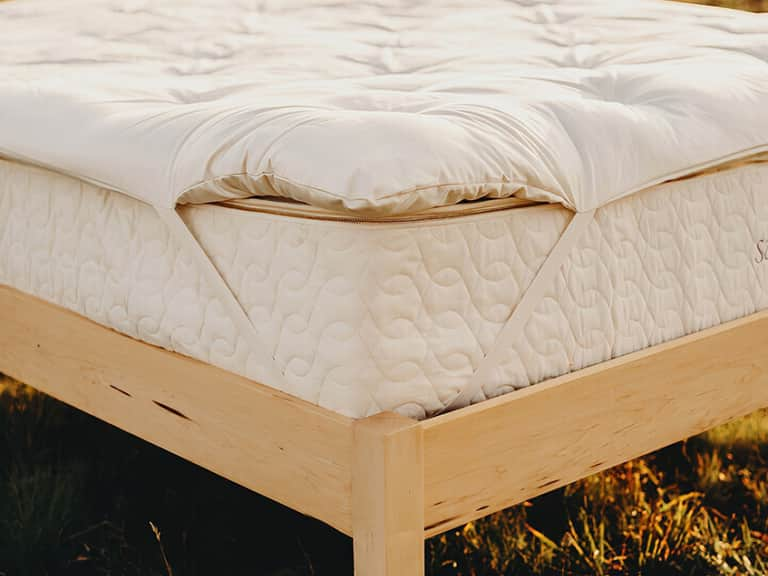
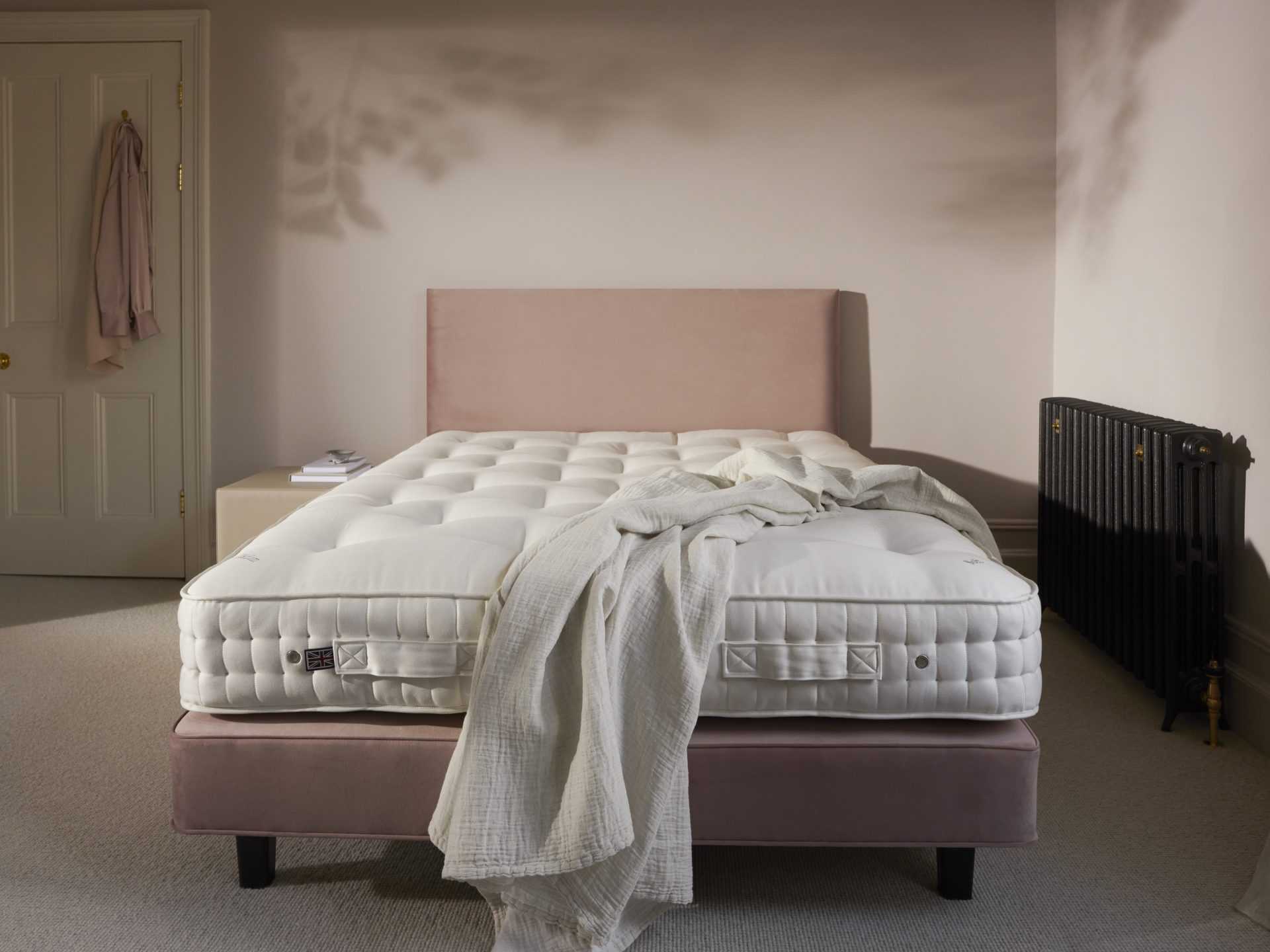
Craft details also contribute to how the bed behaves over time. Tufting can help hold fillings in place, while side-stitching may reinforce the border and improve support near the perimeter. Such techniques are part of a mattress’s overall design, not substitutes for matching its feel to the sleeper.
The comparison at a glance
Rather than assume a particular specification from a model name, use the following comparison as a guide to what to inspect. Ask the retailer or manufacturer for the current details of each version, then consider what those details are likely to mean for your own sleep.
| What to compare | Why it matters | What to verify for each model |
|---|---|---|
| Spring unit | Influences how the mattress responds to weight, movement, and pressure. | Spring type, configuration, count by size, and any differences between versions. |
| Upholstery | Shapes the cushioning, surface temperature, and the transition from the cover to the springs. | Filling materials, layer order, and the stated amount of upholstery. |
| Firmness and feel | Determines how readily the surface yields and how supported different body areas feel. | Available firmness options and whether they apply to the exact size or configuration. |
| Border and finish | Can affect edge stability, usable surface area, and the mattress’s construction. | Side-stitching, handles, tufting, and care or rotation instructions. |
| Fit with your bed | Foundation, mattress size, and partner needs influence the final sleep experience. | Dimensions, base compatibility, delivery access, and trial or return terms. |
Spring design: response beneath the surface
Springs are the mattress’s moving framework. When a shoulder, hip, or other area presses down, the spring unit compresses and then pushes back. That response can feel buoyant, steady, or firm, depending on the spring design and the materials layered above it. Pocket springs are often valued for responding locally, but the experience varies considerably from one mattress to another.
When comparing the Regal Superb and Baronet Superb, look for the manufacturer’s description of each spring unit rather than relying on a general label such as “pocket sprung.” If specifications list different spring arrangements or counts, ask how those figures were measured and which mattress size they refer to. Counts are not directly comparable across different sizes, and a higher count alone does not guarantee better alignment or pressure relief.
For couples, ask how each mattress responds when one person moves. Independent spring action may help limit the spread of movement, though overall motion transfer is also affected by the upholstery and the mattress’s construction as a whole. If one partner is more sensitive to disturbance, a shared in-person test can be informative: one person lies still while the other changes position at a natural pace.
Upholstery: where the first impression begins
The materials closest to the sleeper often determine the first impression. A mattress may feel yielding at the surface before its deeper support becomes apparent, or it may feel more immediate and responsive. The thickness, order, and character of its fillings influence how quickly the body meets the spring unit and how pressure is spread across the sleeping surface.
Natural fibres are often used for their tactile qualities and ability to manage moisture and airflow. Wool, for example, can absorb and release moisture, while cotton is a familiar breathable textile. The results depend on the complete construction, room conditions, bedding, and individual physiology. Material names should therefore be treated as clues, not a guarantee that a mattress will sleep cool or suit a particular sensitivity.
Ask for a layer-by-layer description of both models. If one includes more upholstery or different fibres, consider whether you prefer a more cushioned initial feel or a closer sense of the support below. Also ask how the mattress is finished and whether the maker provides instructions for turning or rotating it. Those instructions can affect how fillings settle and how the mattress wears.
Firmness is personal, not a universal score
Firmness labels are useful shorthand, but they are not a standardized measure shared by every manufacturer. A mattress described as medium in one range may feel firmer or softer than another mattress with the same label. Your body weight, proportions, posture, and preferred sleep position all influence the sensation.
Side sleepers commonly need enough surface give for the shoulder and hip to settle without creating concentrated pressure. Back sleepers may look for a balance that supports the lower back while allowing the pelvis to rest comfortably. Stomach sleepers often prefer a surface that limits excessive sinking around the midsection. These are broad starting points rather than prescriptions: people vary, and many change position during the night.
Instead of asking only whether the Regal Superb or Baronet Superb is “softer,” notice how each responds at the parts of your body that press most firmly into the bed. Does your shoulder feel crowded? Does your pelvis sink more than the rest of you? Can you relax without bracing against the surface? A few minutes of testing may reveal an initial impression, but a longer trial under the seller’s stated terms can provide a more realistic assessment.
Pressure relief and spinal alignment
Support and pressure relief are related but distinct. Support describes how a mattress holds the body in a comfortable posture; pressure relief concerns how force is distributed where the body meets the surface. A mattress can feel soft yet provide insufficient support for a particular sleeper, or feel relatively firm while still accommodating the body in a comfortable way.
When you lie on either model, pay attention to whether your spine feels naturally aligned in your usual position. Side sleepers can ask a companion to observe whether the body appears roughly level from head to hips, while back sleepers can note whether the lower back feels uncomfortably suspended or compressed. These checks are practical observations, not medical assessments.
Persistent pain, numbness, or other symptoms should not be treated as proof that a particular mattress is the cause. Sleep discomfort can have many contributors. If symptoms are ongoing or concerning, seek advice from a qualified health professional rather than relying on a mattress comparison to diagnose or treat a condition.
How to test the two mattresses fairly
A quick sit on the edge reveals little about how a mattress will feel after hours of sleep. If possible, test the Regal Superb and Baronet Superb in the same setting, wearing comfortable clothes and using the position in which you normally sleep. Give each surface time; the body needs more than a brief touch to register differences in cushioning and support.
- Lie in your primary sleep position for several minutes, then try any other position you regularly use.
- Notice pressure at the shoulders, hips, knees, and other contact points.
- Pay attention to how easily you change position and whether the surface feels responsive or restrictive.
- If you share the bed, test it together and notice movement when one person turns or gets up.
- Use the same foundation, if possible, since a bed base can alter how a mattress performs.
- Ask about trial periods, return conditions, delivery, setup, and the exact care instructions before deciding.
Keep your impressions specific. “Comfortable” is a useful beginning, but notes such as “less pressure at the shoulder,” “easier to turn,” or “more stable near the edge” make the comparison more meaningful. If the difference between the two is subtle, that is useful information too: the right choice may then depend on configuration, shared-sleeper needs, or the conditions of purchase and care.
Check the details behind the names
Before comparing prices or drawing conclusions from a specification sheet, confirm that you are looking at the same mattress size and current collection. Manufacturers may revise materials or options over time, and retailers may use different descriptions for the same construction. Ask for the product details in writing, including the spring unit, upholstery layers, available firmnesses, and any differences between sizes.
Also confirm whether the mattress is intended to be used on a particular type of foundation. A compatible, stable base helps the mattress perform as designed; an unsuitable or worn foundation can change the feel or provide uneven support. Check the total height as well, especially if you use deep-pocket sheets, a mattress protector, or a bed frame with clearance limits.
Care can be part of fit. Some mattresses require regular rotation, while others have specific instructions about turning or positioning. Follow the maker’s guidance rather than assuming that every traditional mattress needs the same routine. A well-fitted protector may help guard against everyday soiling, but its fabric and construction can also subtly affect surface feel and airflow.
A practical decision framework
There is no reliable shortcut from model name to personal comfort. Instead, compare the two mattresses through three connected questions: what does the construction contain, how does it feel under your body, and does it suit your daily sleep setup?
- Construction: Verify the current spring and upholstery specifications for the exact Regal Superb and Baronet Superb versions you are considering.
- Feel: Test both in your usual sleep positions and note differences in cushioning, pressure, movement, and edge stability.
- Fit: Account for body size, sleeping habits, partner preferences, bed base, room access, and care requirements.
- Confidence: Review the trial and return policy so you understand what happens if the mattress does not feel right at home.
Think of a mattress as a system rather than a single feature. A spring count cannot tell you how the upholstery feels; a natural filling cannot establish the right firmness; and a showroom impression cannot fully predict a night’s sleep. The best comparison connects the specifications to your lived experience.
Frequently asked questions
Is the Regal Superb necessarily firmer than the Baronet Superb?
Do not assume a firmness ranking based on the model names alone. Feel can vary by specification, configuration, and sleeper. Check the current firmness options and test both models in your usual sleeping position.
Does a higher spring count mean better support?
Not on its own. Spring count is one construction detail, and comparisons should account for mattress size, spring design, upholstery, and how the bed feels under your body.
Will natural fillings keep every sleeper cool?
Not necessarily. Fibre properties may contribute to moisture management and airflow, but temperature is affected by the full mattress, bedding, room, and individual comfort. Test the complete sleep setup where possible.
Can a mattress correct back pain?
A suitable sleep surface may feel more comfortable for some people, but a mattress is not a diagnosis or guaranteed treatment. Seek professional advice for persistent or significant symptoms.
The right construction is the one that fits
The Vispring Regal Superb and Baronet Superb are best compared through their actual construction and your own response to it. Spring architecture establishes the foundation; upholstery shapes the surface; stitching and finishing contribute to how the mattress behaves as a whole. None of those details can replace a careful fit assessment.
Start with current specifications, then test each mattress in the position you sleep in most. Look for a surface that feels comfortable without sacrificing the support you need, and remember that a mattress’s performance depends on its foundation and the person using it. In the end, the meaningful distinction is not simply which model has more layers or a more impressive description. It is which one lets your body settle into a comfortable, sustainable night of sleep.